
 David L. Hoffmann BSc Hons MNIMH
Guaiacum officinale Zygophyllaceae Names: Guaiac, Lignum vitae. Habitat: W. Indies, Florida and S. America. Collection: The resin of the woods exudes naturally and is often collected and used as such, otherwise the heart-wood itself is cut into...

Guaiacum officinale Zygophyllaceae Names: Guaiac, Lignum vitae. Habitat: W. Indies, Florida and S. America. Collection: The resin of the woods exudes naturally and is often collected and used as such, otherwise the heart-wood itself is cut into...

Crataegus oxyacantha & C. monogyna Part used Whilst the berries are the most often used part of this shrub, the flowers and leaves may also have a role to play. Constituents Its constituents highlight the importance of flavones and flavonoids in...

Viburnum opulus Part Used: Dried bark. Constituents: Hydroquinones; arbutin, methylarbutin and traces of free hydroquinone Coumarins, such as scopoletin and scopoline Tannins; mainly catechins. Actions: Anti-spasmodic, anti-inflammatory, nervine...

Foeniculum vulgare Part Used: The seeds. Constituents: The whole complex of primary plant constituents and a characteristic array of secondary plant constituents are present. Pharmacologically important constituents include volatile oil, major...

Geranium maculatum Part Used: The rhizome. Constituents: Tannins including gallic acid, with the level being highest just before flowering. Actions: Astringent, anti–haemorrhagic, anti-inflammatory, vulnerary. Indications: American Cranesbill...

Tanacetum parthenium Part Used: Leaves. Constituents: Volatile oil, containing pinene and several pinene derivatives, bornylacetate and angelate, costic acid, b-farnesine and spiroketalenol ethers Sesquiterpene lactones; the major one being...

Bellis perennis Compositae Collection:The flowers may be picked between March and October. Part Used: Fresh or dried flower heads. Constituents: Saponins Tannin Essential oil Flavones Bitter principle Mucilage. Actions: Expectorant, astringent...

Scrophularia nodosa Scrophulariaceae Names: Rosenoble, Throatwort, Carpenter’s Square, Scrofula Plant. Habitat: A European and British wild plant. Collection: The stalks and leaves are gathered during flowering betweenJune and August. Part...
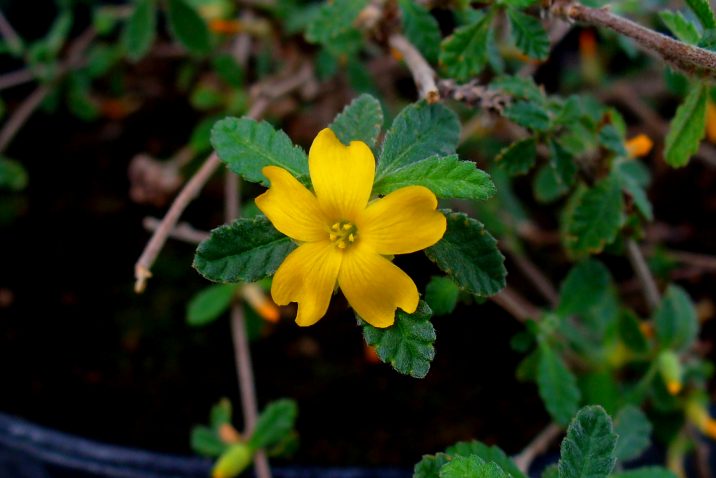
Turnera diffusa Turneraceae Names: Turnera aphrodisiaca Habitat: Southern USA, Mexico and parts of sub-tropical America andAfrica. Collection: The leaves and stems are gathered at the time off lowering. Part Used: Dried leaves and stems...

Taraxacum officinale Compositae Habitat: Widely distributed throughout most of the world as a “troublesome weed.” Collection: The roots are best collected between June and August when they are at their bitterest. Split longitudinally...

