Fucus vesiculosus Fucaceae Names : Kelp, Seawrack, Kelpware, Black-tang, Bladder Fucus, Cutweed. Habitat : A seaweed common in colder waters. Part Used : The whole plant. Constituents : Phenolic compounds, phloroglucinol, its dehydropolymerization...
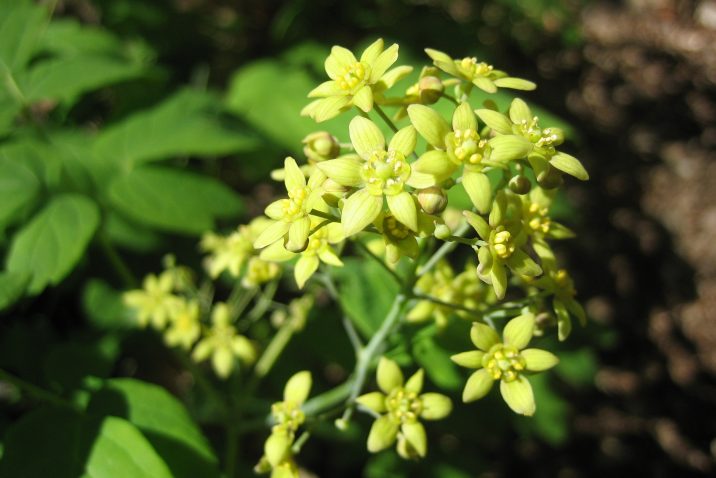
Caulophylum thalictroides Berberidaceae Names : Papoose Root, Squawroot Habitat : USA Collection : The roots and rhizome are collected in the autumn, as at the end of the growing season they are richest in natural chemicals. Part Used : Root &...
Peas (Pisum sativum) are members of the Fabaceae (Pea) Family, making them relatives of beans and peanuts. The genus name, Pisum is from the ancient Greek and Latin word for this vegetable. Sativum, the species name, means “with a long history...
Kiwifruits (Actinida chinensis), are a member of the Actinidiaceae (Kiwi) Family, and developed from a smaller, less flavorful Chinese gooseberry. The genus name Actinida is from the Greek aktin, meaning, “ray,” describing the ray-like...
The familiar sweet orange comes from Sicily, Israel, Spain and the United States, each offering a slightly different characteristic. Chu-lu, the first monograph describing the various citruses, was written in China in 1178. Extraction: Cold-pressed...
The fragrance of rose has inspired poets and lovers throughout the ages. The Greek poetess Sappho christened it “queen of flowers” in 600 BC. Although originally distilled in Asia Minor, today Bulgaria is the world’s largest...
Probably an Iranian native, jasmine has captured the imagination for centuries. Forty-three different species are grown in East India, where women dress their hair with it and where it is poetically known as “moonlight of the grove.”...
This large European and west Asian plant is common in herb gardens. It tastes like a very strong celery. The herb is often used in treating women’s complaints. Family: Apiaceae (Umbelliferae) Extraction: Distilled from fresh roots, or from...
A well-loved Mediterranean herb, this English lavender has been associated with cleanliness ever since Romans added it to their washing water. In fact, the word comes from the Latin word lavare (“to wash”) and is the root for the word...
Q Having congratulated myself on sailing through the menopause with no hot flushes, I now find myself struck down with vaginal atrophy.