
 What Doctors Don't Tell You
While all the talk these days is about the Iraqi war, there are plenty of ex-servicemen from the first conflict who are still counting the cost.

While all the talk these days is about the Iraqi war, there are plenty of ex-servicemen from the first conflict who are still counting the cost.
Recombinant DNA technology - or gene engineering - has progressed dramatically in the past decade to the point where it now represents 98 per cent of all fertility drugs prescribed in the US.
Ever since Louise Brown, the first ever test-tube baby, came into the world in 1978, in-vitro fertilisation (IVF) has become the first port of call for people having trouble conceiving. Since Louise’s birth,
Infertility is becoming an increasingly frequent problem. Many people go to fertility experts and, by discovering an anatomic problem (e.g. blocked fallopian tubes), or problems with ovulation, are able to get help. Unfortunately, many people find...
Acupuncture can increase fertility by reducing stress, increasing blood flow and balancing the endocrine system, according to several studies and medical research. A study published in Fertility and Sterility examined 80 patients who received...
Men's and women's reproductive health issues are an important part of herbal and medical health care in modern societies. Herbal remedies have been used throughout history to help ease symptoms and balance hormones. For instance, the Mediteranean...
Women tend to be the primary health care providers in most families. In the vast majority of homes women are responsible for watching over the health needs of the children, and by their shopping and cooking, they are responsible for fulfilling the...
Dana Ullman, MPH, internationally recognized expert in homeopathy discusses the homeopathic approach to common men's health conditions including sexually transmitted diseases, impotence, urethritis and bladder infections, prostate and testicular...
It’s easy to forget to ask your doctor all your questions and express all your concerns. The following checklist helps to identify what things you might forget to ask and discuss. Jot down the questions from the list that you want to ask your doctor...
Fibroids are benign (not cancerous) tumors made mostly of muscle tissue. They are found in the wall of the uterus and sometimes on the cervix. They can range in size from as small as a pea to as large as a basketball!


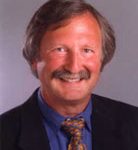 Dr Jacob Teitelbaum MD
 Pacific College of Oriental Medicine
 Christopher Hobbs LAc AHG
 Dana Ullman MPH
 American Institute for Preventive Medicine